Thursday, 26 April 2012

A White Palette


People in the UK love going abroad. We might be subject to lashings of stereotypes about our preferred holiday dress (football shirts and interestingly printed shorts - you know who you are), our preferred holiday behaviour (drinking and wallowing by the pool) and our preferred holiday food (fish and chips) but we do love getting away to hotter places, particularly the mediterranean. When we return from a holiday it takes, on average (science shows), 14 days for the holiday spirit to disappear again.

We can't do anything about the weather but we can suggest bringing a little of that mediterranean vibe into your home by taking inspiration from their interiors. The look is simple and efficient, yet charming too. The one rule is to use a white, light palette.

There are some fantastic advantages to such a simple colour. White is obviously a very bright, light colour and using it is going to make the space seem much larger and open. It isn't a rich or creamy colour and can look sterile, but with the right dressing up a white wall can be a great start to a light, airy home.

You need to make sure that plenty of light will reach the walls. This should preferably include natural light, but if there aren't any nicely positioned windows, then a stylish light fitting would serve. Its important to consider how the light will fal on the room - if you have white walls and a harsh light, the room may end up looking like a hospital ward.

You needn't be afraid of introducing other colours to the room. A room of pure white looks sterile. Any other light colours will work well but the trick in whatever colour scheme you pick is consistency.


Furnishings-Direct is an online retailer of interior decor.

Monday, 12 March 2012

Shabby Chic Interiors

One style of interior design that has been very popular for a few decades is  Shabby Chic. The basic idea is simple: furniture and furnishings are chosen for their weathered, aged appearance and then contrasted with minimalist or cottage decor. This differentiates the style from genuine period decor.


How to get the look? The first step is finding 'shabby' furniture. You could look in antique and vintage shops, searching out elegant pieces that look like they've seen a bit of wear-and-tear. You can keep them in their traditional colour, or paint over them in white. Either way, its important that the furniture looks distressed - you could do this, for example, through sanding the corners. However you go about it, the distressed, aged furniture is key. You could also rest kooky or vintage items on your furniture to accent the look.
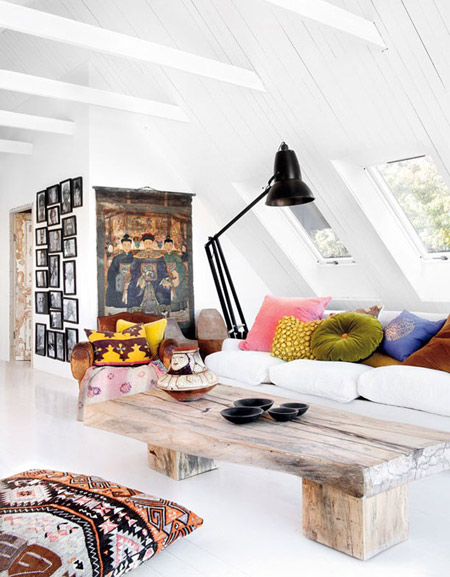
If you look at the image to the left, the designer has used old, rustic wooden furniture with a very distressed and unsymmetrical style. Accents from other cultures pepper the room - a chinese tapestry, a morrocan floor-cushion, a central american vase.

With your furniture chosen, the next step is to cover the room in white. This evokes minimalist style, but the decorative accents stop it from looking like a white box. This paint scheme creates a sense of lightness in the room.

The floor should be similarly light. In the example to the left, the designer has kept a white floor. However, any light colours would be permissible. You could use a cream carpet or white floorboards etc.

The final step is further accentuation. To finish your room you should use soft pastel colours, which bring focus and a slightly feminine feel to the design.


 Furnishings-Direct is an online retailer of paints, wallpapers and decor.  

Thursday, 9 February 2012

Exclusive Collection Preview

Today I'm very excited to present you all with a sneak peek at a new range of products, soon to be launched on Furnishings Direct.  We've encountered a great deal of demand for rugs and, as ever, we are committed to offering our customers products that are both great quality and on trend. 


These Shimmer rugs will be available in a range of colours. They are individually hand tufted and feature a colour graduated design.


The Hong Kong range of rugs, again offering different sizes, patterns and colours, are also hand tufted. They are brighter and bolder than the shimmer designs, featuring floral or geometric motifs as opposed to the colour graduation.


Also from the Hong Kong range; the entire collection is 100% handmade, assuring high quality. This is a great look at some of the stylish designs in the collection.


The polypropene graphic design range also present some interesting themed rugs. These are particularly sharp and modern.


So that's just a quick look at some of our exciting new designs in the upcoming rug range. Stayed tuned to this blog and the website for more details coming soon.

Furnishings Direct is an online retailer of designer wallpaper and household furnishings.

Tuesday, 24 January 2012

2012 Design Trends: The Nordic Influence

Nordic culture is all the rage. In the last year  we have seen the continued influence of Stieg Larsson's Millenium Trilogy in the release of English-language film of The Girl With The Dragon Tattoo, starring Rooney Mara and Daniel Craig. It was so critically acclaimed that the studio have signed off on the two sequel films already. Danish TV has also proved popular - acclaimed dramas Borgen and The Killing have been shown on the BBC. Equally, mid-century style was hot last spring and the Scandinavians practically invented mid-century style. The people of Norway are, on average, the happiest in Europe. All in all it really is no surprise that the influence of Norway, Sweden and Denmark is so noticable this year.

The Home Tradeshow took place last week. There 25% of exhibitors were from the nordic countries. The tradeshow attracts buyers from both the high street and design/interior stores. This means that some of what they saw last week will hit the shops in the next few months.

Ferm Living were one company exhibiting. Their manager says nordic design is "retro meets modern...clean and honest, the colours are complimentary - less is more, and everything is functional." This is the guideline for the trend then. The Guardian describes the range as "It's all very stylish and very graphic; fresh colours, clean geometric patterns repeated all over cushions and throws, tea pots and tumblers in minty greens and a bright, bold nursery range featuring fox cushions."
The promotional material for the show featured a range of teapots designed by Swedish designer Lotta Odelius, and these were high on everyone's wishlist.Verso Design from Finland featured a range of heavy textiles and throws.

Nordic design wasn't the only trend developing, but it was certainly prominent.

So, to attain the nordic style just follow these simple tips:
  • Mix retro styles with modern influences.
  • A pallette of fresh colours. This thinking can be applied to everything - from wallpaper and paint, to bed covers. They are bright and airy and give an uplifting feel of enlightenment to a room.
  •  Geometric patterning - again wallpapers are a great way to bring this into your home.
Furnishings Direct is an online retailer of bedding, wallpaper and paint.

Thursday, 5 January 2012

Moroccan Design


Morocco has a distinct flavour in its culture, its food and its architecture. Its look is bright and vibrant, yet warm and welcoming, exotic. These reasons combined make it an excellent style to feature in your home.


African, Mediterranean, European and Moorish styles have all influenced the decorative look of Morocco.

The style is exotic and is created through the use of expressive, rich colours and earthly textures. These seem warm and welcoming, and so a Moroccan look is brilliant in areas like hallways, porches and living room where you will entertain.

When painting your walls, don't be afraid of using rich, energising colours: oranges and blues. Mixing in sand with the paint can create texture, which is another feature of this style.

Tiles are a key feature of this style, often in shades of blue and green or turquoise. Tiles can be used on the floor, the walls, or on tables.

When it comes to furniture, a simple and rustic style is necessary - dark woods with iron decorations, for example. If you wish to combine european furniture with the moroccan style, think of items like this folding screen. The colours are very moroccan, but the product itself is of european design and the style would not traditionally be found in Africa. For fabrics look for vivid colors and rich, opulent, sensuous patterns like this Cuzco Spice Duvet Set. When accessorising the room, use pottery with geometric designs, wall art and iron lamps.

Furnishings Direct sells designer wallpaper at reduced prices and other homewares.

Thursday, 15 December 2011

How to hang wallpaper

Furnishings-Direct sells a great deal of wallpaper. This means that we want to make sure you're investment is not ruined by poor application of the wallpaper.

Preparation

The first thing you need to check is that all your rolls are from the same batch (check the batch number) and the they are the same colour and shade. This probably all sounds very obvious, but with paler colours it can be more difficult to tell if they match perfectly. Ensure than you check them in daylight. Before you begin papering, consider whether you are going to use lining paper. It is great on dodgy walls, but unecessary on those that are better constructed.

Whatever you choose, when it comes to the actual  papering, you need a proper pasting table. Don't be afraid to spend money on a pasting table, as a sturdy one will make your papering far better and will last much longer. When pasting, use a roller rather than a brush; check on the wallpaper specification what kind of paste is best to use (as they can differ). Also have ready a plumb line, a stepladder, some PVA glue, both a big and little paintbrusg and a pencil,, scissors, some small Stanley blades and, last but not least a wallcovering smoother.

The Papering

  1. The first step is to 'size' the wall. This involves filling a bucker up, half with water and half with PVA and applying the mixture to the walls with a brush before letting it dry properly. There is a point to this; the wallpaper paste sticks far better to the glue than it does to a bare wall.
  2. The second step is to give yourself a perfect straight line along which to hang your wallpaper, ensuring it stays straight. Along each wall, hang a plumb line against the wall and draw along its vertical line. Do this at regular intervals on each wall, as walls tend to be uneven.
  3. Next you must cut your wallpaper to size by measuring the floor-to-ceiling height of the marked walls along the vertical lines you just drew. Once you have the height, you can mark your table so you know the correct length. Don't do too many at once though, because you may need to recut them.
  4. If you are using lining paper, obviously put this up first. It can have the important effect of covering structural imperfections and providing a smooth base for your wallpaper. Whichever you use, stretch the wallpaper flat along the table. Keep one edge level with the table edge. Also,  place weights at each end to keep the paper down. Spread the paste on top of the wallpaper.
  5. Actually pasting the paper to the wall requires it to be "concertina-ed". Lift the wallpaper and pull it back to create a fold with the left edge (lift about 50cm from the left edge). Repeat this process until all the wallpaper is folded into a concertina, 50cm wide.
  6. Take the wallpaper and attach the first pasted fold to the wall where it meets the ceiling. Don't be afraid to go higher than the wall and then to trim off any excess.
  7. Gradually unfold the wallpaper down the wall, manouvering it for the best fit. Make sure the strips do not overlap but instead line up perfectly . If the corners of the paper appear to be lifting, apply more paste to the edges with a small brush and then use the smoother to flatten it and get rid of bubbles.
  8. When you are removing excess wallpaper, score a mark in the paper using the edge of some scissors. Pull the paper back and cut along the mark. This can work for tricky corners too. If in doubt you should use too much paper and then cut it back. Stanley knives give a sharper cut.
  9. If you have used lining paper, please ensure that it has dried before you apply the wallpaper. If there are imperfections after applying the lining paper, tap them out with a hammer.
Furnishings-Direct supplies designer wallpaper at great prices!

Friday, 9 December 2011

Japanese Interior Design

A romanticised view of Japanese culture has long been an important cultural force in the West, as have the imported traits of Japanese architecture and design. But what exactly is Japanese interior design? How do we incorporate it in our homes? There are several key truths about Japanese design and to understand them, you must understand something of the history and philosophy of the Japanese.

What is recognised as the Japanese aesthetic comes from the ideals and tenets of Taoism, a way of thinking brought from China in ancient times. The culture of Japan is extremely varied and diverse, yet in the field of interior design, the aesthetic is consistently one of simplicity and minimalism.

Laozi, a Taoist philosopher, believed that the true beauty of a room came from the empty space within the roof and walls - the aesthetic ideal of emptiness. The Taoists suggested that the mood should be captured in the imagination, not by what is physically there. Elaboration, craftsmanship, beauty and delicacy was the basis for Japanese designs and is still valued today!

The use of natural materials is an important theme in Japan; their simplicty highlights the minimal and natural decoration, which in turn connects the room to nature.. It is common for materials like wood, bamboo, silk, rice straw mats, and paper shōji screens to be used. Similarly, natural colour schemes are common with neutral palettes of black, white, off-white, grey and brown. In using these materials, the designs are concious of using resources efficiently. Rooms are designed to be flexible in use and multi-funtional. The shōji screens allow rooms to be opened up or closed down.

The shōji screens are made of paper and then attached to quite thin wooden frames that roll away on a track when they are pushed. Shōji are also  meant to allow light through. This is an important aspect to Japanese design. Paper translucent walls allow light to be diffused through the space and create light shadows and patterns.

There are other common design features in the Japanese tradition:

Bamboo is frequently present in the Japanese home, being used both for decorative and functional purposes. Bamboo blinds, sudare, replace shoji in summer to prevent excess heat inside and also offer greater ventilation. Country dwellings and farmhouses often use it for ceilings and rafters. The natural properties of bamboo, its raw beauty with the knots and smooth surface, corrrspond to Japanese aesthetic ideals of imperfection, contrast and the natural.

The use of paper, or washi, in Japanese buildings is a main component in the beauty and atmosphere of the Japanese interior, the way variation of shadow combines to create a “mystery of shadows”. A range of papers are used for various purposes in the home.

Wood is generally used for the framework of the home, but its properties are valuable in the Japanese aesthetic, namely its warmth and irregularity.

A recessed space called tokonoma is often present in traditional as well as modern Japanese living rooms. This is the focus of the room and displays Japanese art, usually a painting or calligraphy.


We hope this article has been both helpful and informative! Japanese minimalism is an attractive design for your home, don't be afraid to try it!

Furnishings Direct sells designer wallpaper at reduced prices and other homewares.